
Having a trip to Minnehaha Falls in Minneapolis? Discover local tips, scenic trails, history, and seasonal highlights for the perfect outing.
If you’re planning on visiting Minnehaha Falls in Minneapolis, let me tell you—this is one of those places that never really gets old, no matter how many times you go. Whether you’re new to the city or you’ve lived here for years, visiting Minnehaha Falls Minneapolis feels like stepping into a completely different world, even though you’re still in the city.
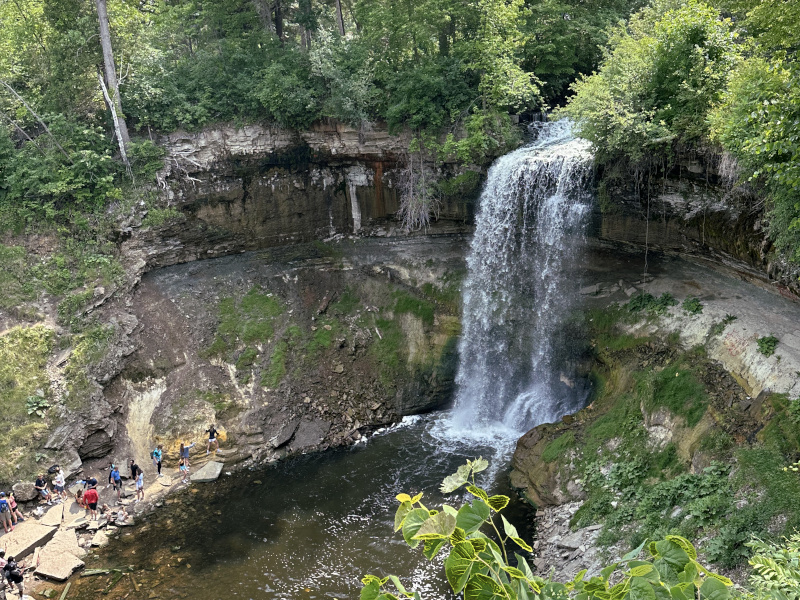
The waterfall is the centerpiece—a 53-foot cascade that draws you in immediately—but what makes this place memorable is everything around it. The sound of rushing water blends with rustling trees, and within minutes, the city noise fades into the background. It’s one of the rare urban parks where you can genuinely slow down without having to leave town.
One of my favorite things to recommend is taking the stairs down to the base of the falls. That mist hitting your face on a warm day is refreshing in a way that feels almost therapeutic. But here’s something important—if you’re visiting in winter, those same stairs can turn into sheets of ice. I’ve seen people lose their footing more than once, so good traction shoes aren’t optional. The frozen version of the falls, though, is something else entirely—massive icicles form a kind of natural cave behind the waterfall. It’s beautiful, but you need to be careful.
What to Do Beyond the Falls
What makes it special isn’t just the waterfall—though that 53-foot drop is impressive every single time. It’s the way everything comes together: the sound of the water, the shaded trails, and the gradual transition from park to creek to the Mississippi River. On a sunny spring or summer weekend, this is where locals go to slow down. The park is a lush, green sanctuary—perfect for a long bike ride through the interconnected city trails. You’ll see people biking in from all directions, families setting up picnics, and couples just walking the trails without any particular destination.
If you have time, don’t stop at the falls. Follow the trail along Minnehaha Creek all the way to the Mississippi River. It’s an easy walk, and the further you go, the quieter it gets. You’ll pass small bridges, patches of wildflowers in spring, and even sandy riverbanks that feel surprisingly secluded. It’s one of those walks where you forget you’re in a major metro area. It’s also incredibly bike-friendly.
A Perfect Spot for a Relaxed Day Out
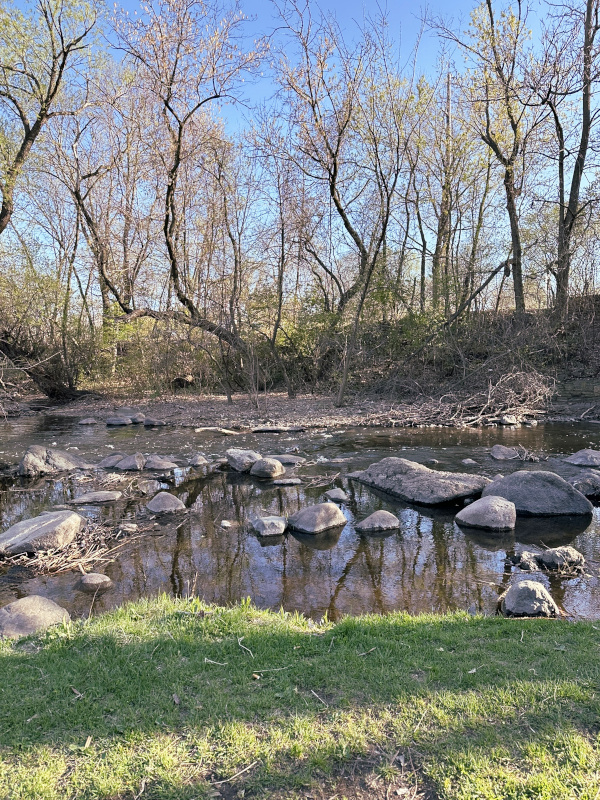
What I appreciate most is how flexible this place is. You can make it whatever kind of day you want.
If you’re with family, there are picnic areas, open green spaces, and easy walking paths. If you’re on your own, it’s a peaceful place to reset. And if you’re showing visitors around Minneapolis, this is usually one of the first stops—it’s accessible, scenic, and doesn’t require much planning.
Right near the falls, you’ll also find Sea Salt Eatery, a seasonal favorite. It’s known for its seafood-focused menu and outdoor seating under large oak trees. On a sunny day, grabbing food here and sitting outside is part of the experience. They are open from April through October. For more information, you can visit their website.
The Story Behind the Falls: Hiawatha and Minnehaha
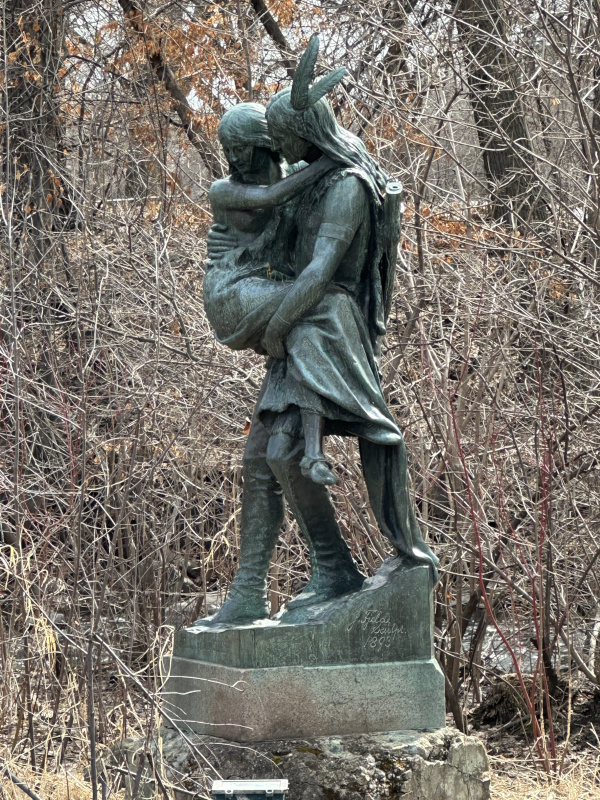
To really understand the cultural significance of this place, you have to look beyond the scenery. While walking toward the overlook, you’ll encounter the bronze sculpture of Hiawatha and Minnehaha. It depicts Hiawatha tenderly carrying his bride, a scene that feels incredibly romantic until you know the weight of their story.
The name “Minnehaha” comes from the Dakota language—mni meaning water and haha meaning waterfall or curling water. Long before it became a park, this area was part of the homeland of the Dakota people, one of the Indigenous nations of the region. Nearby, the Ojibwe people also have deep historical and cultural roots in Minnesota.
The story most people associate with the falls comes from The Song of Hiawatha by Henry Wadsworth Longfellow. While it’s a literary interpretation—not a direct historical account—it brought national attention to the area.
In the story, Hiawatha is an Ojibwe leader, and Minnehaha is a Dakota woman—the daughter of a respected arrow-maker. Their relationship represents more than romance; it symbolizes unity between two different peoples. They fall in love, marry, and build a life together.
But the story doesn’t end happily.
During a brutal winter, famine and disease strike their community. While Hiawatha is away hunting, Minnehaha becomes ill and dies, leaving him devastated. It’s a tragic ending that contrasts sharply with the peaceful beauty of the falls.
Near the park, you’ll find a sculpture depicting Hiawatha carrying Minnehaha in his arms. It’s a powerful image—romantic at first glance, but much deeper when you understand the story behind it.
Parking and Practical Tips For Your Trip to Minnehaha Falls
Getting here is easy, but a little planning helps. There are paid parking lots within the park, typically charged by the hour. If you’re looking to avoid that, free street parking is available in nearby residential areas—especially to the north and west—but those spots fill up quickly on weekends.
If you want a quieter experience, try visiting early in the morning or on a weekday. This place attracts hundreds of thousands of visitors each year, so timing can make a big difference.
Final Thoughts: How to Experience It Like a Local
If you’re thinking about visiting Minnehaha Falls Minneapolis, the best advice I can give is simple—don’t rush it. Come on a nice day. Walk more than you planned to. Sit for a while and just listen to the water. Maybe grab something to eat, maybe explore further down the creek than you expected.
It’s not just about seeing the falls—it’s about spending time in a place that feels calm, layered with history, and surprisingly immersive for being right inside the city of Minneapolis.